Polyurethane foam lifting costs a fraction of tear-out and replacement — but it isn't always the right call. Here's how to decide.
The basic price comparison
Polyurethane foam lifting for a standard two-car driveway runs $1,800–$3,500. Tear-out and replacement for the same driveway runs $8,000–$15,000. For most NWA homeowners the math is one-sided — until you understand the exceptions.
When lifting is clearly the right call
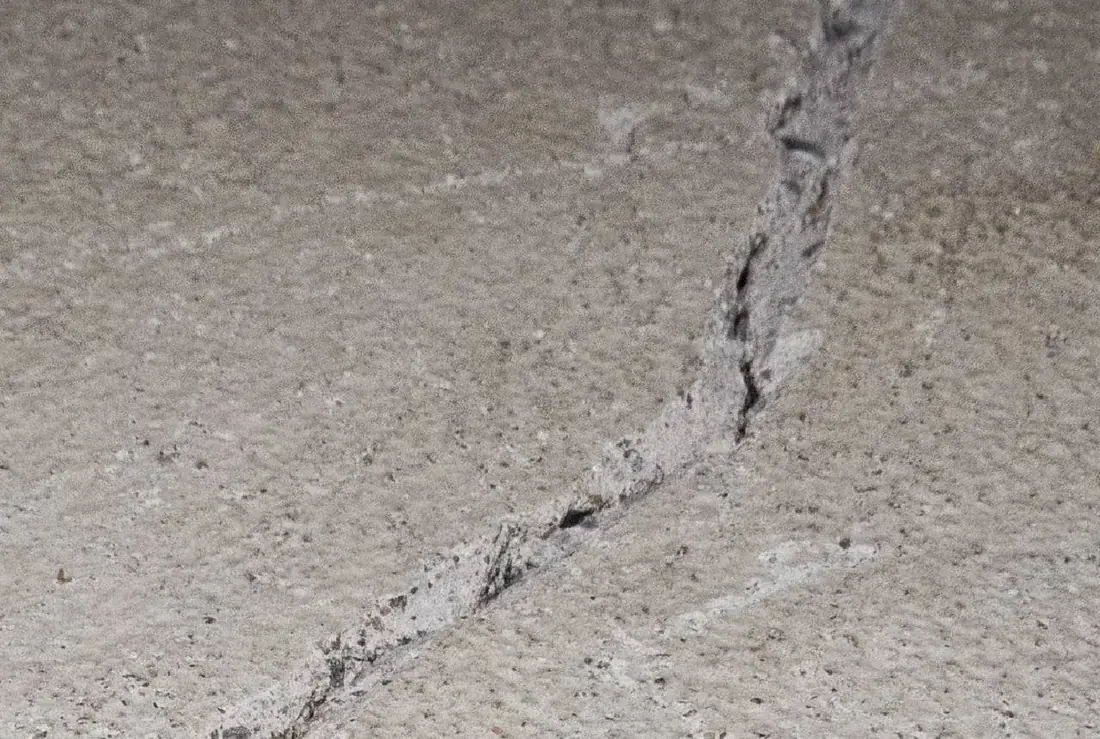
Lifting wins when the concrete itself is structurally fine and the problem is purely that the soil under it has settled or washed out. Signs that lifting will work: clean horizontal cracks that closed up when you pushed the slab back to level (try with a pry bar), minimal spalling, no major spider-cracking, and edges that haven't crumbled.
Typical good candidates: settled driveway aprons, sunken sidewalks, dropped pool decks, garage floors that have sloped toward the door over the years, patio slabs that have pulled away from the house. All of these usually lift cleanly with foam and last decades.
When replacement is the better choice
Replace when the concrete is past its structural service life. Signs: heavy spalling that exposes aggregate, edges crumbling away, large network cracks (more than two intersecting cracks), or slabs that have broken into multiple separate pieces that no longer behave as a single unit. Lifting a slab that's already failed structurally just produces a level pile of broken concrete.
Also replace when you're remodeling and the project requires a different elevation, plumbing run, or drainage pattern. There's no point in lifting a slab you're about to cut up anyway.
Things foam lifting does that replacement doesn't
Foam fills voids in the soil underneath, stabilizing it against future washout. Replacement leaves the same weak soil in place and gives you a brand-new slab that will probably settle the same way in 10–15 years unless the underlying drainage issue is also fixed.
Foam is waterproof and won't wash out the way mudjacking slurry will. It cures in 15 minutes. Foot traffic is fine immediately; cars within a couple of hours.
What about mudjacking?
Mudjacking — pumping a cement slurry under the slab to lift it — is the old-school method. It works, but the slurry weighs 100+ pounds per cubic foot, which adds load to the already-weak soil that caused the settlement. It needs days to cure, the injection holes are bigger, and the slurry can wash out over time. Polyurethane foam weighs about 2 lbs per cubic foot and lasts much longer. We don't mudjack.
How to decide for your project
Walk the slab. Press on the cracked sections. If the concrete is intact, lift it. If it's crumbling, replace it. If you're not sure, a five-minute look from a contractor will tell you immediately. We don't push foam on jobs that need replacement, and we don't push replacement when a $2,200 foam job will fix the problem.
Need a real recommendation for your concrete? (479) 441-9515.