Cracks, sticking doors, uneven floors — what's normal and what's serious. A practical, no-panic guide for Northwest Arkansas homeowners.
Why early detection matters
Foundation problems are almost never sudden — they're slow, then they're expensive. A crack that's a $600 polyurethane injection today can become a $14,000 underpinning job in three years if water keeps working its way in and the soil keeps shifting. The single best thing a Northwest Arkansas homeowner can do is learn the six early signs below and call for an inspection the moment one shows up.
None of these signs guarantees a serious problem — old houses do old-house things — but each one is worth a five-minute look. Free inspections exist for exactly this reason.
1. Stair-step cracks in brick or block
Cracks that follow the mortar joints in a step pattern — up one block, over one block, up again — are the textbook sign that the footing under that section is moving. A vertical crack straight up through both brick and mortar is usually less urgent (often expansion-related), but a clear stair-step pattern almost always means the soil under the corner is consolidating or eroding.
On Mount Sequoyah and Markham Hill we see this constantly: the brick veneer is fine, but the footing has rotated as the hillside slowly crept. The fix is push piers or helical piers under the affected corner, not re-tuckpointing the visible damage.
2. Doors and windows that suddenly stick
Wood doors swelling in humid weather is normal. A door that suddenly won't latch — or shows a diagonal gap in the top corner of the frame — is a different problem. It usually means the wall above the door has racked because the foundation under it has shifted, twisting the frame out of square.
If multiple doors in the same end of the house start sticking around the same time, that's a strong indicator of foundation movement in that section. Take a photo of the frame gap, note the date, and call for an inspection.
3. Sloping or bouncy floors
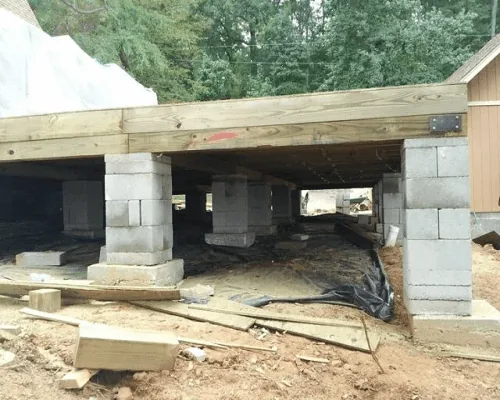
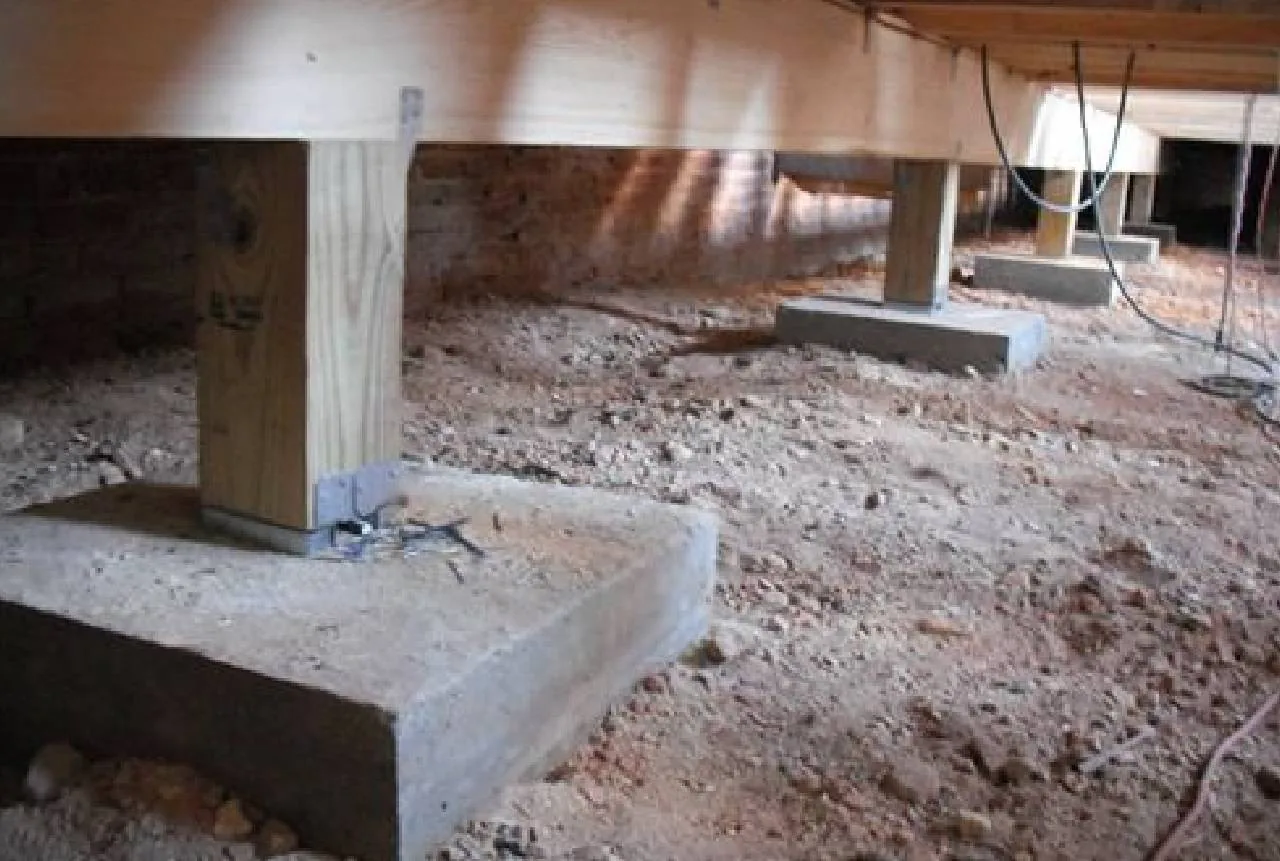
Roll a marble across a long stretch of floor. If it picks up speed in one direction, you have measurable slope. Floors that feel bouncy or noticeably soft underfoot in pier-and-beam homes usually mean failed shims, rotted floor joists, or a sagging beam beneath. Both problems are fixable, but neither one fixes itself.
4. Cracks in interior drywall, especially above doorframes
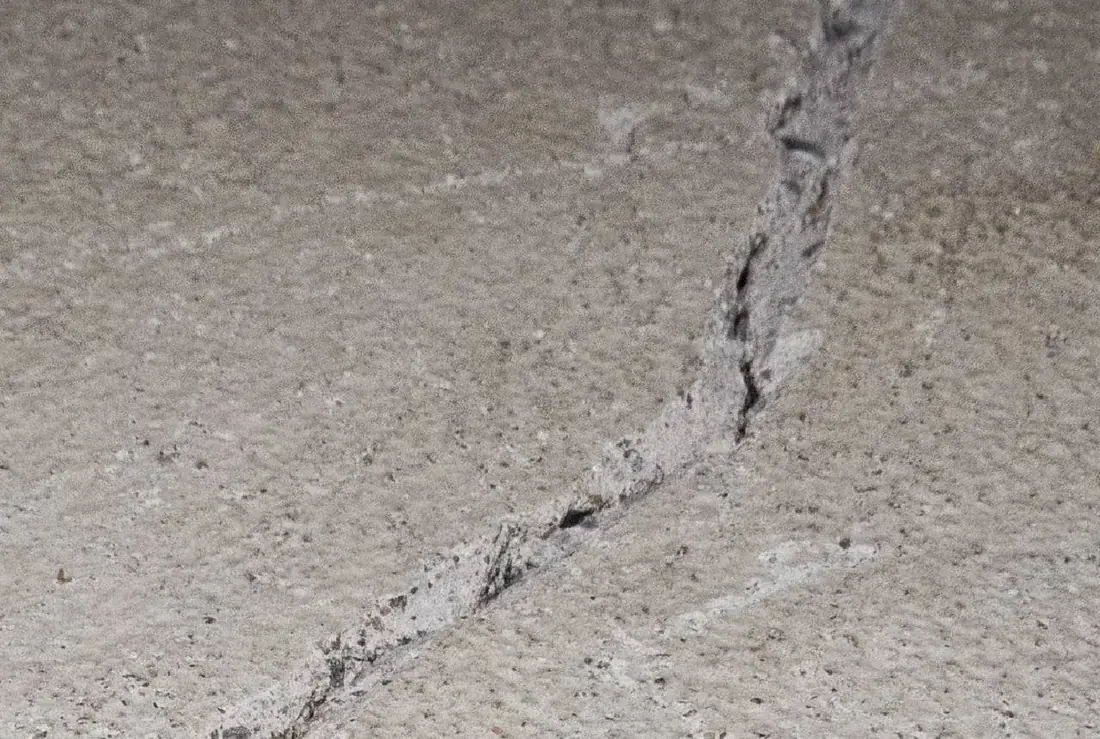
Hairline cracks at the corners of doorways and windows show up in almost every house at some point — they're stress points where the framing concentrates load. The ones to worry about are cracks wider than a credit card, cracks that re-open after you've patched them, or diagonal cracks that run from the corner of a door up to the ceiling. Those mean the wall itself is moving.
5. Gaps around windows, doors, or where walls meet ceilings
If you can see daylight between the top of an exterior door and its frame, or a gap is opening where the wall meets the ceiling, the structure has shifted enough to pull components apart. This is past the early-warning stage. Don't caulk it and forget it — get someone to assess the cause.
6. Water in the basement or crawl space
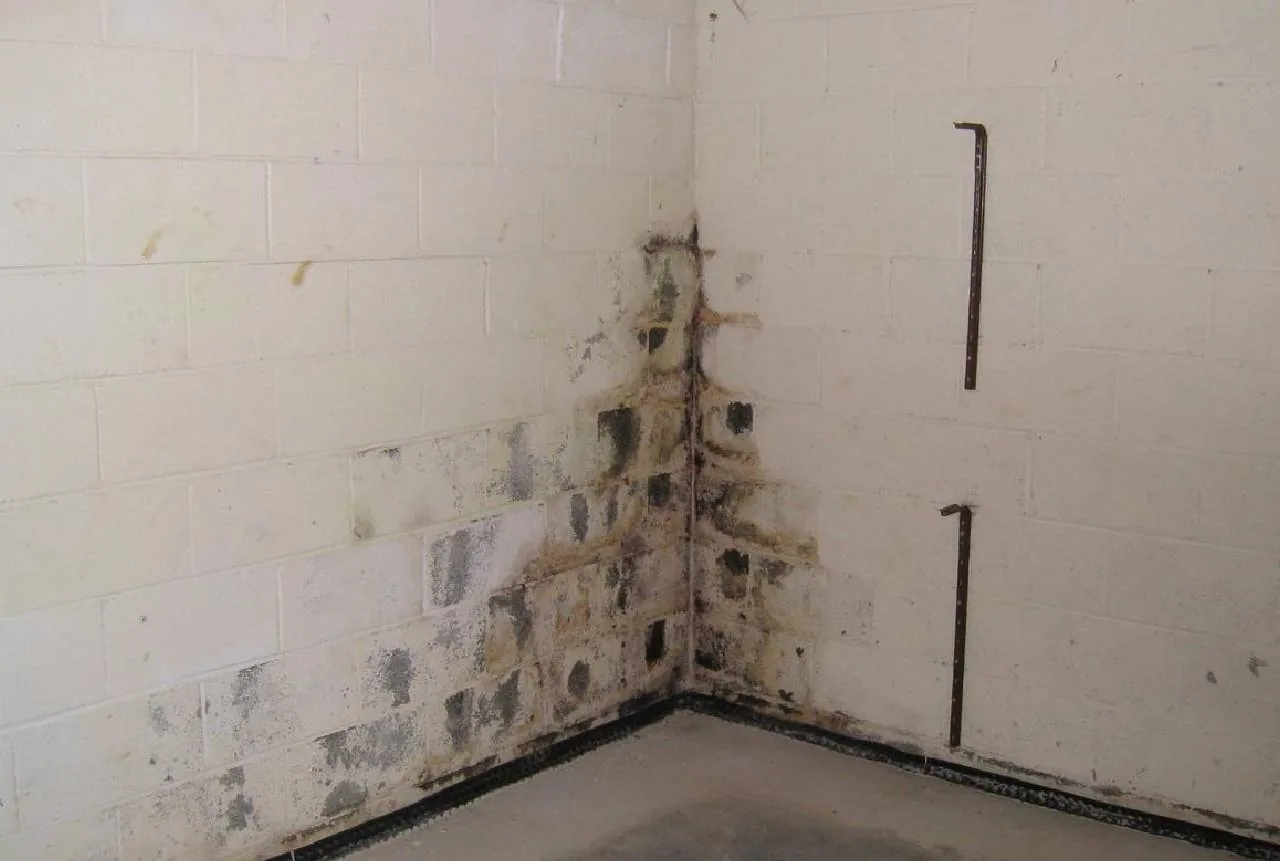
Standing water in a crawl space, efflorescence (white mineral residue) on basement walls, or a persistent musty smell are all signs that water is reaching your foundation. Even if the foundation looks fine today, the moisture cycle is rotting framing, growing mold, and slowly eroding the soil that supports your footings. Address it before the structural damage starts.
What to do next
If any of these are happening at your house, the first step is a free inspection — not a repair. A good foundation contractor will measure floor elevation, look at crack patterns, check for moisture, and tell you whether you have a problem worth fixing now, something to monitor, or nothing structural at all. We give you a written report either way.
If you're in Fayetteville, Springdale, Rogers, Bentonville, or Bella Vista, we can usually get out within a few business days. Call (479) 441-9515 or request an estimate online.