Two foundation types, two very different repair playbooks. Here's how to tell what you have and what kind of work it might need.
How to tell what you have
If you walk around the outside of the house and see vents along the foundation perimeter — and you can locate a hatch or access door into a crawl space — you have a pier-and-beam foundation. If the floor sits directly on concrete and there's no crawl space, you have a slab. In NWA, most homes built before about 1985 are pier-and-beam; most homes built after the late 1990s are slab. Homes from the in-between years can be either.
Knowing which you have changes what repairs make sense, what they cost, and how long they take.
Pier and beam: how it works (and how it fails)
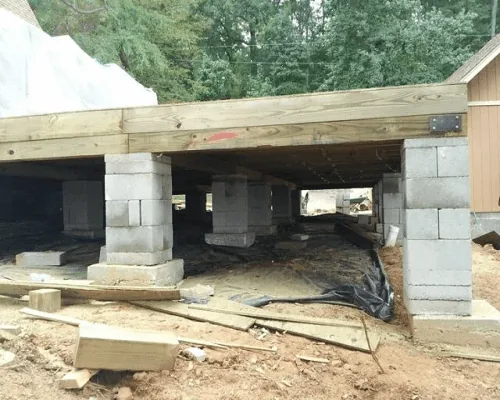
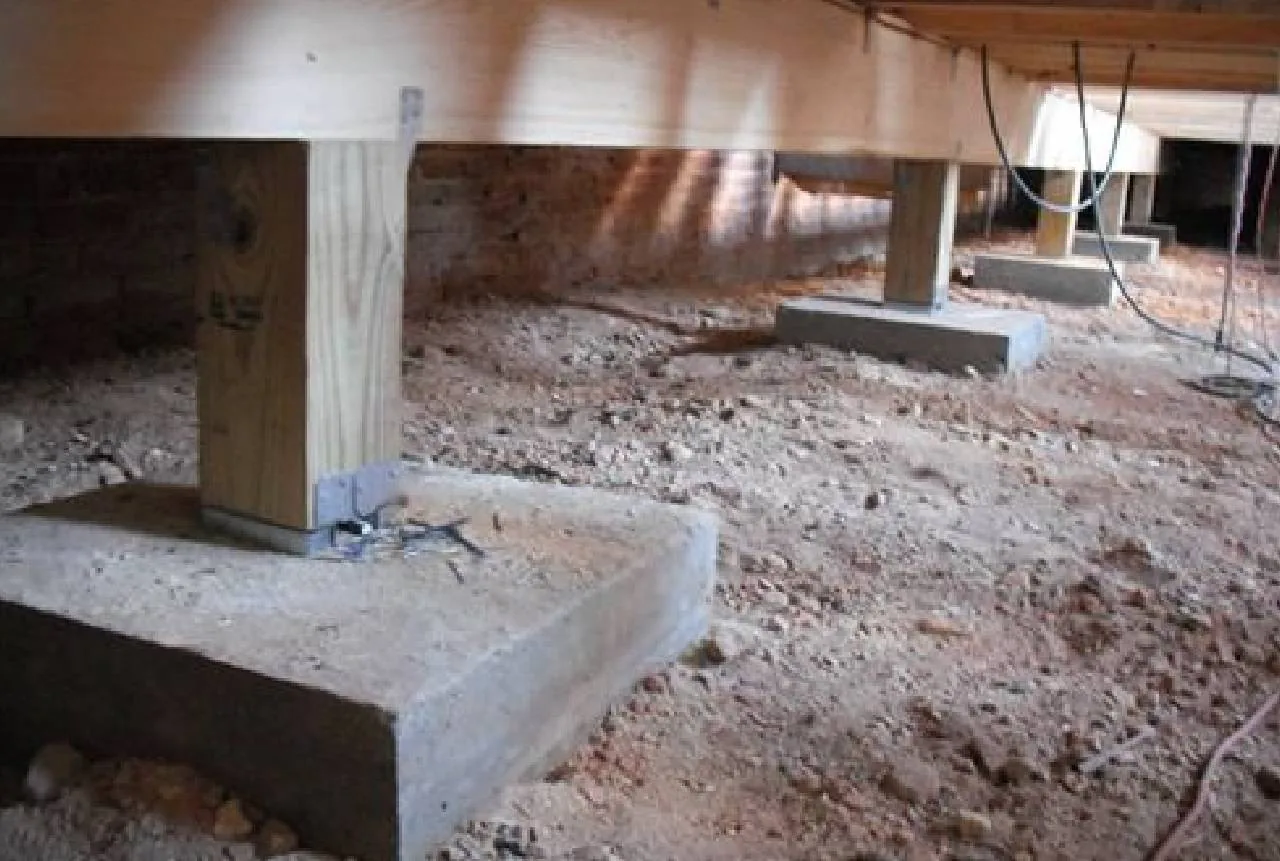
A pier-and-beam foundation supports the house on a perimeter wall plus a grid of interior piers — usually concrete blocks or poured pads — that hold up wood beams. Floor joists span between the beams; the subfloor sits on the joists. The whole assembly sits a foot or two above the ground, with a crawl space underneath.
Failures fall into two categories. First, the pier itself can shift or tip as the soil underneath it consolidates — that's what causes sloping floors. Second, the wood components above (joists, beams, shims) can rot, sag, or sister-fail from moisture or insect damage. Both are fixable, often without disturbing finished living space.
What pier-and-beam repair actually looks like
On a typical NWA pier-and-beam job, we crawl the entire foundation, mark every shifted pier and sagging beam, and build a repair plan. Failed piers get replaced with poured concrete pads and treated shims. Sagging beams get sistered with new lumber or supported with new steel jack posts. Rotted joists get sistered or replaced.
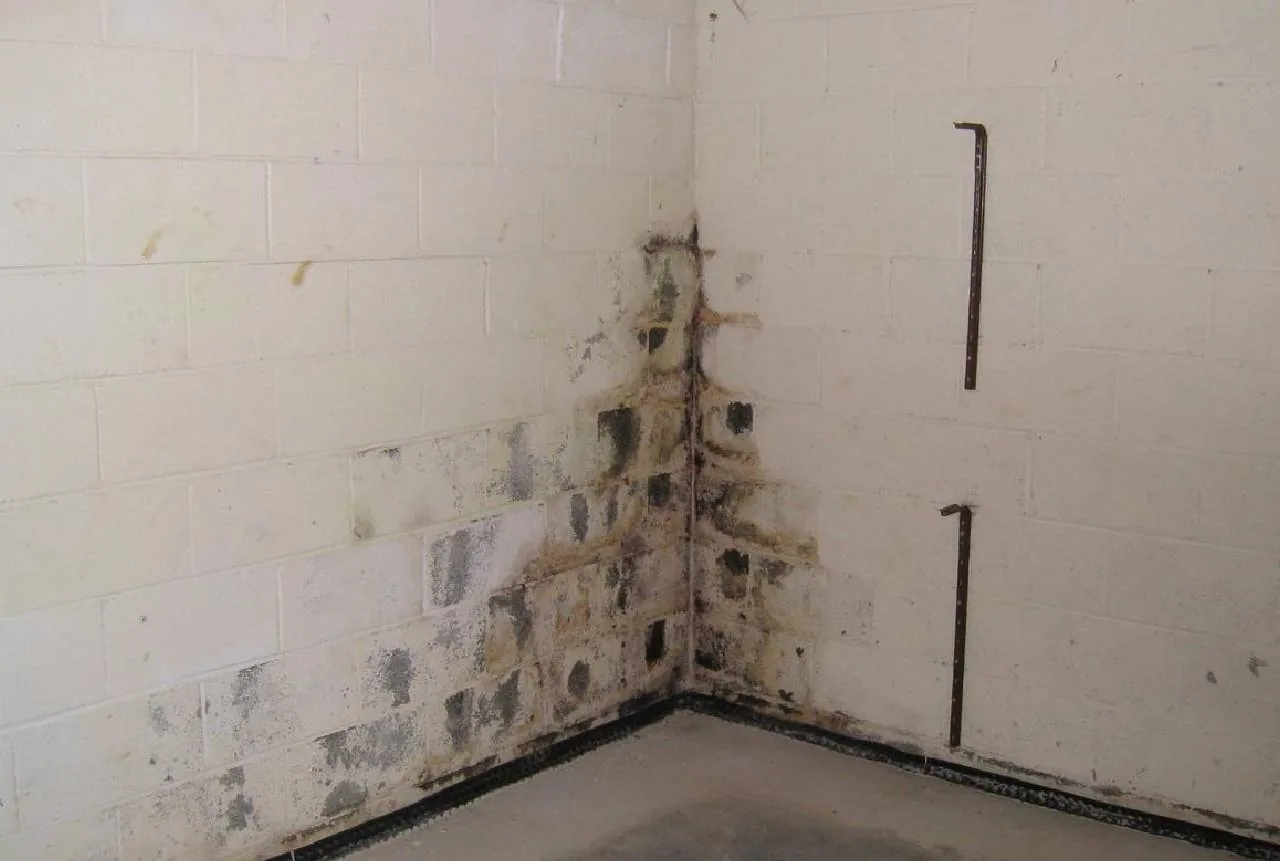
Almost every pier-and-beam repair also includes moisture work: a 12-mil vapor barrier on the ground, sealed vents, and (for damp areas) a dehumidifier. Without that step, the wood components you just replaced are on the same rot timeline as the originals.
Slab: how it works (and how it fails)
A concrete slab is a single monolithic pour, typically 4–6 inches thick with embedded rebar or post-tension cables, sitting directly on prepared soil with the framing built on top. There's no crawl space, no shims, no wood substructure to rot.
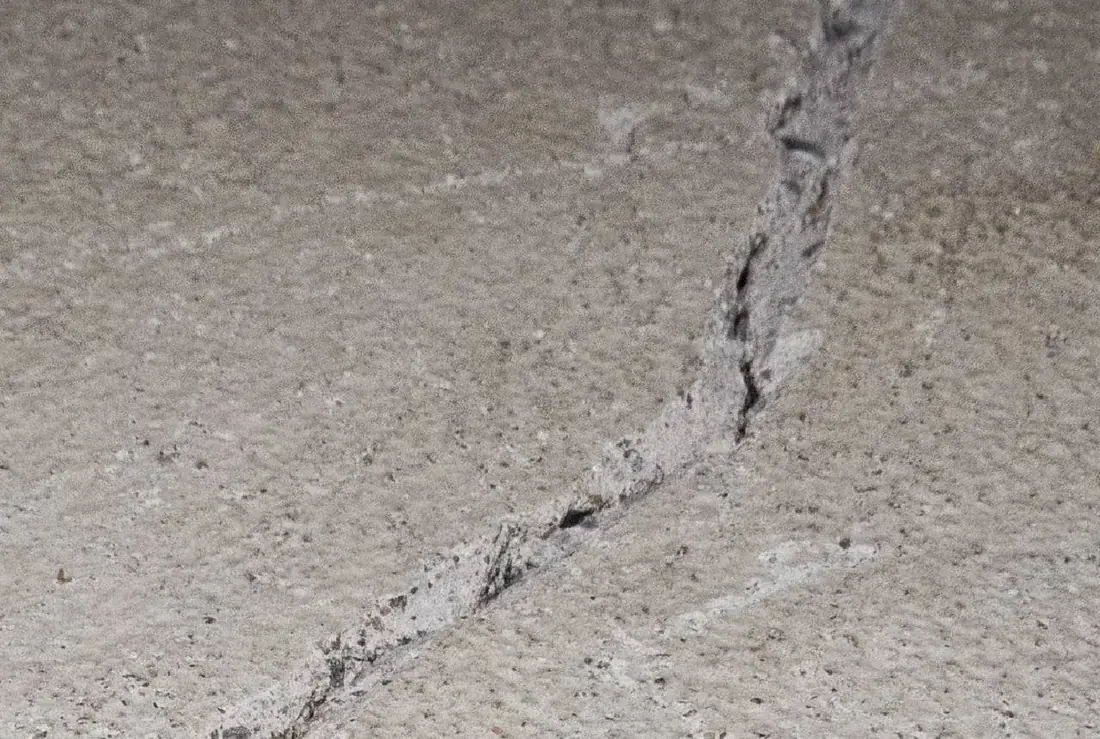
Failures come from movement of the soil below the slab. When soil shrinks (drought, dry winters) or washes out (drainage problems, plumbing leaks), sections of the slab lose support and can crack, settle, or curl. Edge cracks and corner settlement are the most common patterns.
What slab repair actually looks like
Targeted underpinning is the standard fix: push piers or helical piers driven down through the soil to load-bearing strata, then connected to the slab's edge beam with steel brackets that allow us to lift and stabilize the failing section. We don't pour a new foundation — we transfer the load of the existing one to deeper, stronger soil.
For interior slab settlement (a low spot in the middle of a room), polyurethane foam lifting works through small injection ports. For active cracks, polyurethane injection seals against water and prevents further movement.
Which is better?
Neither, honestly. Pier-and-beam wins on accessibility (plumbing repairs are dramatically easier), insulation flexibility, and the ability to ride out small soil movements without cracking. Slab wins on cost, speed of construction, and durability against insect and rot damage. Both can last a century when designed for the soil and maintained.
What matters for repair is matching the fix to the failure type. Don't let anyone sell you push piers on a pier-and-beam home when the actual problem is failed shims — and don't let anyone sell you 'leveling' on a slab when the right fix is underpinning.
Not sure which you have?
We can confirm in about five minutes during a free inspection, and either tell you what kind of repair the house needs or confirm that you don't need one. (479) 441-9515.